From PowerPoint to interactive e-learning: learning through the years
Author
Martijn Katsman


Date
November 3, 2025
Reading time
5 min.
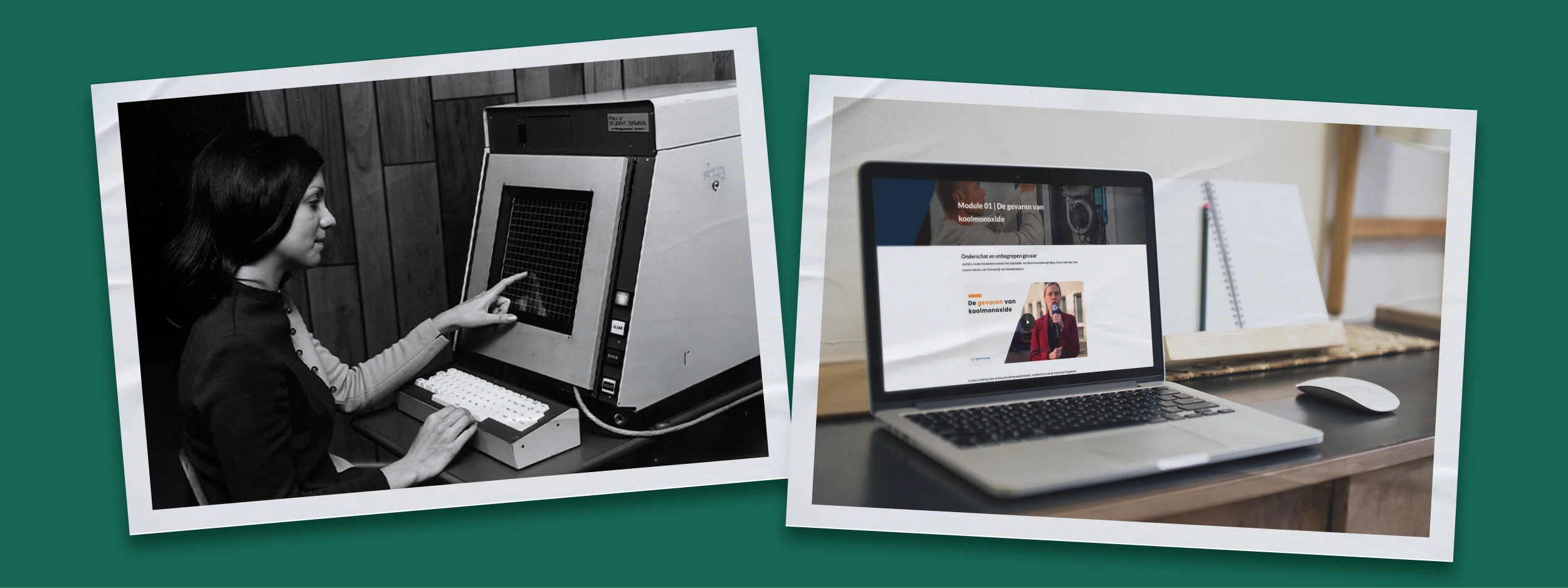
E-learnings have changed significantly in recent years. In the early days, they were digital textbooks, comparable to a PowerPoint. Nowadays, you can't rely on that anymore. The interactive e-learning has become the norm.
The target audience is challenged to absorb the learning material through fun and relevant assignments. In this blog, we look at the development of the e-learning over the years. Or, in our own words, how a boring e-learning was replaced by a cool challenge.
E-learnings have changed significantly in recent years. In the early days, they were digital textbooks, similar to a PowerPoint. Nowadays, that just won't cut it. The interactive e-learning has become the norm.
The target audience is challenged to absorb the learning material through fun and relevant assignments. In this blog, we look at the development of the e-learning over the years. Or, in our own words, how a boring e-learning was overtaken by a cool challenge.
The first e-learning
It is not entirely clear when the first e-learning appeared. The term was first heard in 1999, in the United States. However, distance learning has existed much longer; this was already being done in the nineteenth century. Thanks to the rise of the internet, e-learning has become increasingly popular, and the COVID-19 crisis has further accelerated this trend. But we are not there yet.
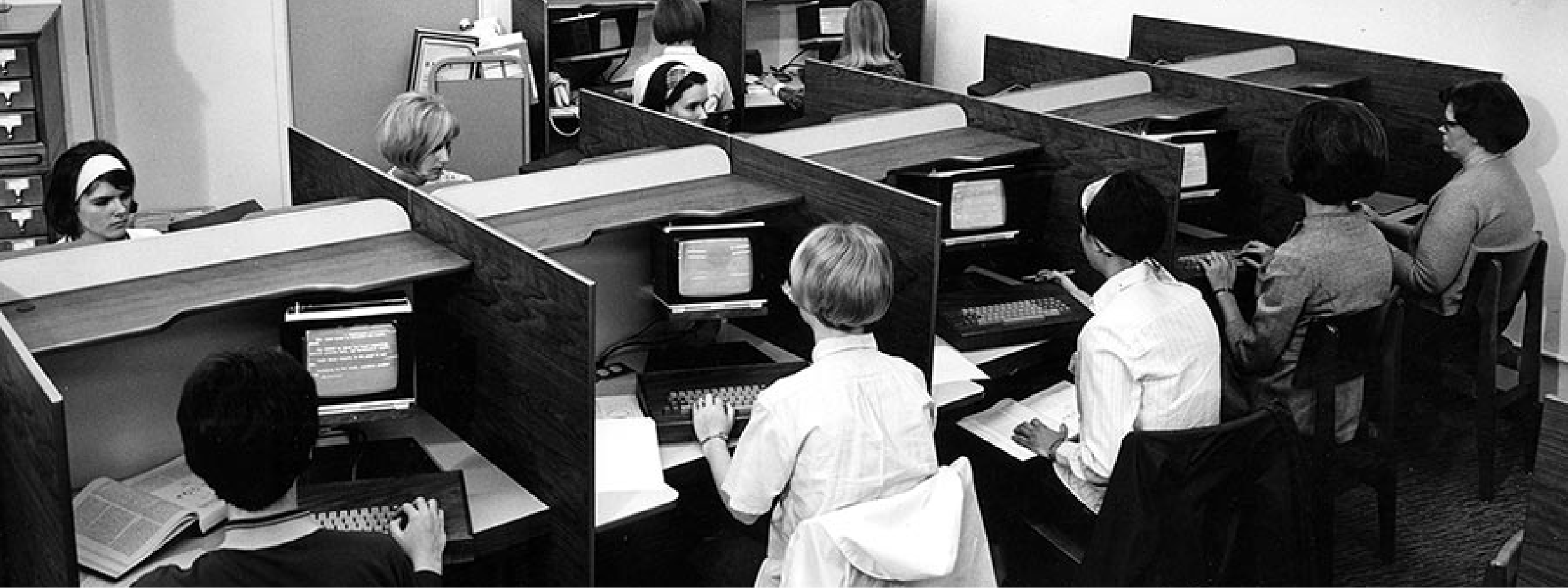
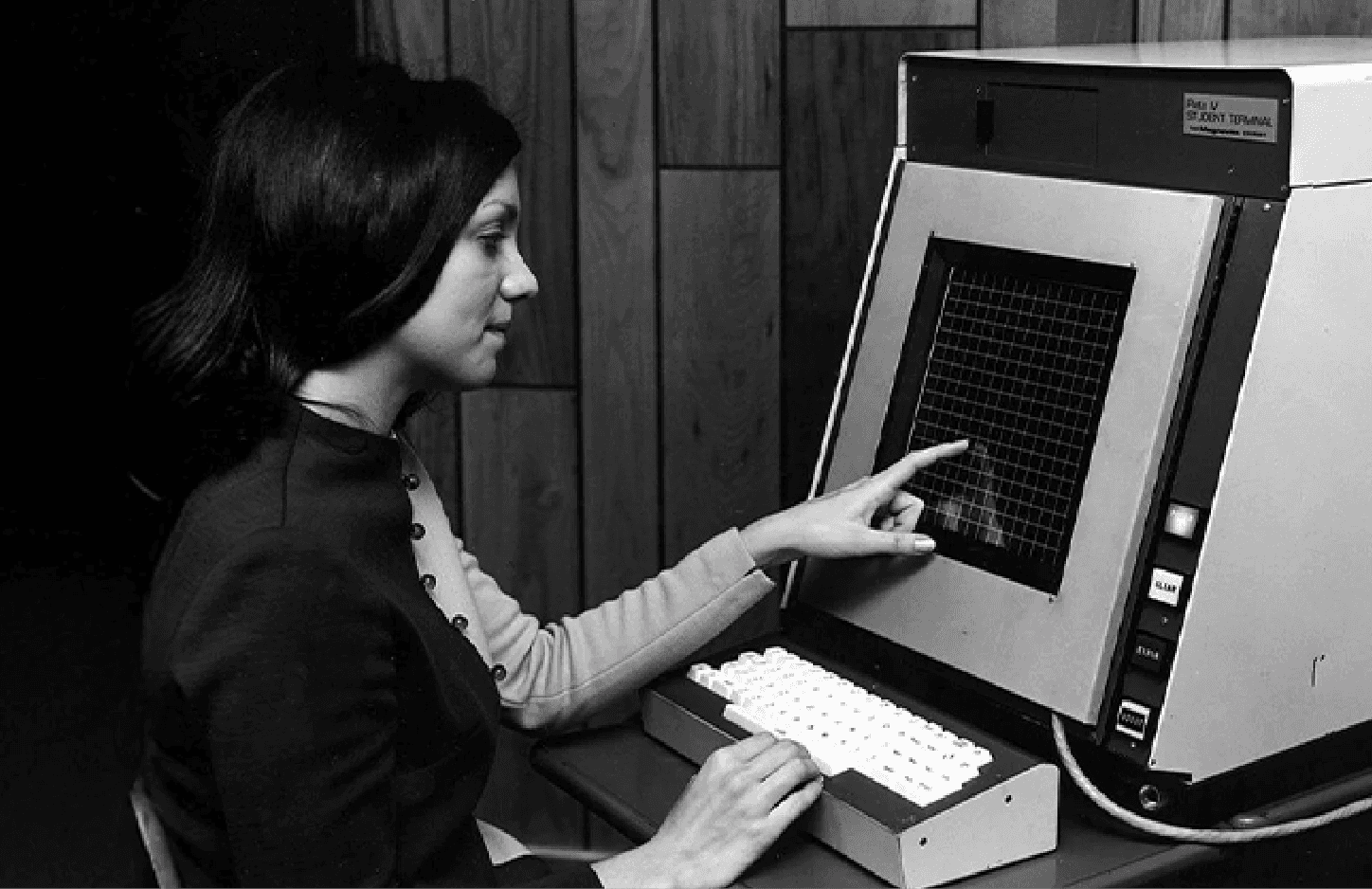
In the 1960s, computers were already used for educational purposes, such as tutorials and tests. The computers were large and slow, but the beginning was there. Two decades later, it began to resemble something due to the introduction of multimedia technologies and the ability to track progress. The computer itself kept track of whether questions were answered correctly and whether the knowledge of the student improved.
In 2000, the first open-source learning management system was released, immediately followed by the first version of SCORM, a standard for packaging and distributing learning materials within a lesson system.
Then things picked up speed. The rise of smartphones and tablets made e-learning accessible via mobile devices. People could follow e-learning anywhere. By 2025, e-learnings are used not only in education but also in business. In the latter category, online training, webinars, and onboardings are popular.
The developments of e-learnings
An e-learning from the past is hardly recognizable today, and if you see one, the chances are quite high that your laughter muscles will be activated. The first e-learnings were simple interactive programs on the computer, which had a fixed structure and limited multimedia. It was mainly text, supplemented with some simple images. After the introduction of the internet, a significant leap forward was made, allowing more interaction.
In the 1980s and 1990s, software on a PC was used to provide training. This often went via a CD-ROM, which you inserted into your PC, after which the program would start. In the early days, you had to remember to save your answers to the CD-ROM, otherwise, you had worked for nothing. These e-learnings were certainly useful, but they were not attractive.
The introduction of the internet meant that larger groups could work on e-learning in the same environment. Schools were initially hesitant, but companies saw an ideal opportunity to train their staff and/or customers cheaply.
The first e-learning
It is not entirely clear when the first e-learning appeared. The term was first heard in 1999, in the United States. However, distance learning has existed much longer; it was already being done in the nineteenth century. Thanks to the rise of the internet, e-learning has become increasingly popular, and the COVID-19 crisis has accelerated this trend even further. But we are not there yet.
In the 1960s, computers were already used for educational purposes, such as tutorials and tests. The computers were large and slow, but it was a start. Two decades later, thanks to the introduction of multimedia technologies and the ability to track progress, it began to resemble something more. The computer kept track of whether questions were answered correctly and whether the student’s knowledge improved.
In 2000, the first open-source learning management system was released, immediately followed by the first version of SCORM, a standard for packaging and distributing learning materials within a learning system.
Then things moved quickly. The rise of smartphones and tablets made e-learning accessible via mobile devices. People could follow e-learning anywhere. By 2025, e-learnings are used not only in education but also in business. In that latter category, online training, webinars, and onboardings are popular.
The developments of e-learnings
An e-learning from the past is no longer recognizable, and if you see one, there's a good chance your laughing muscles will be put to work. The first e-learnings were simple interactive programs on the computer, which had a fixed structure and limited multimedia. So it was mostly text, supplemented with a few simple images. After the introduction of the internet, a significant leap forward was made, allowing for more interaction.
In the 1980s and 1990s, software was used on a PC to conduct training. This often occurred via a CD-ROM, which you inserted into your PC, after which the program would start. In the early days, you had to be careful not to forget to save your answers to the CD-ROM, or else you would have worked in vain. These e-learnings were certainly useful, but they were not attractive.
The introduction of the internet enabled larger groups to work on the same e-learning in the same environment. Schools were initially hesitant, but companies saw an ideal opportunity to train their staff and/or customers in a cost-effective way.

Examples of e-learnings from the past
When we talk about e-learnings from the past, we mean the period around 2010. At that time, e-learning had really arrived and was more than just words on a screen. During that period, you could take a training course on workplace safety, where you clicked through various slides, absorbed the material, and took a test at the end. This example can be compared to a PowerPoint presentation.
Another example from that time is a video series about a program like Excel, with demonstrations of how this program worked. These were various instructional videos that were mainly focused on broadcasting (training the student), and not on interaction, simply because that option did not yet exist.
Examples of e-learnings from the past
When we talk about e-learnings from the past, we mean the period around 2010. At that time, e-learning had really arrived and was more than just words on a screen. During that period, you could take a training course on workplace safety, where you clicked through different slides, absorbed the material, and took a test at the end. This example can be compared to a PowerPoint presentation.
Another example from that time is a video series about a program like Excel, with demonstrations of how this program works. These were various instructional videos, primarily focused on sending (training the student), and not on interaction, simply because that possibility did not exist yet.
From PowerPoint to Interactive E-Learning
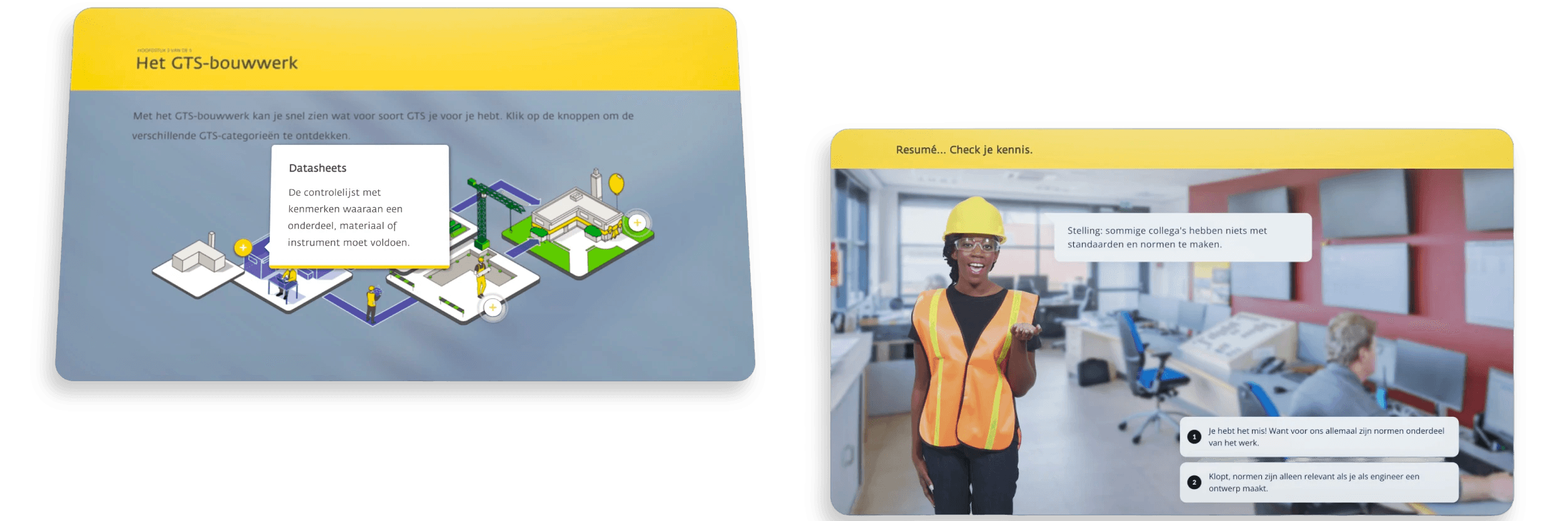
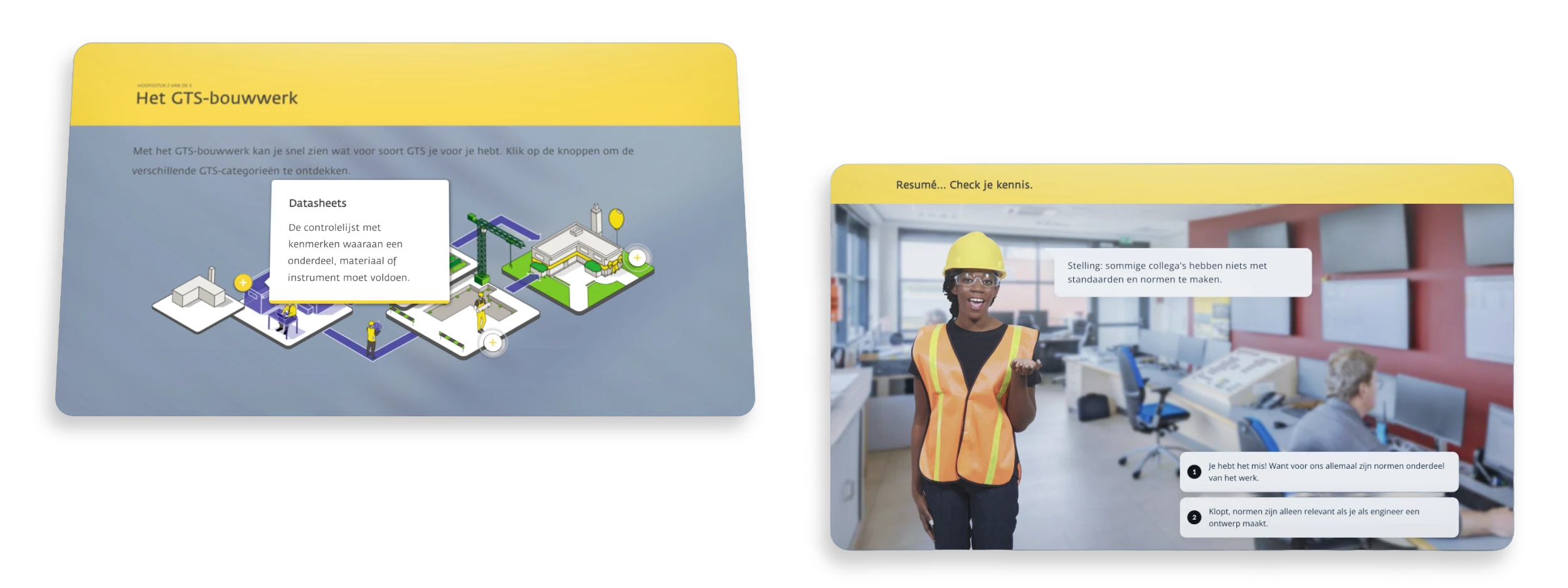
You no longer recognize e-learnings. The long texts and PowerPoint-like e-learnings have been replaced by interactive modules that maximize both the learning material and the participant.
The interactive element is integrated in various ways. One example is a so-called drag-and-drop exercise. Here, participants must drag items (answers, products, etc.) to the correct place. Terms are linked to definitions or steps in a process that need to be put in the correct order. You may remember this from school, now it happens digitally.
Scenario-based choices are also interactive. The participant is presented with a realistic situation and must make a choice from multiple options. Based on the choice, feedback follows, or the participant moves on to the next element in the learning experience.
What also works well is a quiz at the end of a topic. Through multiple-choice, drag-and-drop, or fill-in questions, participants receive explanations or feedback on their answers immediately after responding. This helps with active knowledge processing.
From PowerPoint to Interactive E-Learning
You no longer recognize e-learnings. The long blocks of text and PowerPoint-like e-learnings have been replaced by interactive modules that maximize both the material and the learner's experience.
The interactive element is integrated in various ways. One example is a so-called drag-and-drop exercise. Here, participants must drag items (answers, products, etc.) to the correct place. Concepts are linked to definitions, or steps in a process must be arranged in the correct order. You might remember this from school; now it happens digitally.
Scenario-based choices are also interactive. The learner is presented with a realistic situation and must make a choice from multiple options. Based on the choice, feedback follows or the learner moves on to the next element in the learning experience.
What also works well is a quiz at the end of a topic. Through multiple-choice, drag-and-drop, or fill-in-the-blank questions, participants receive explanation or feedback on their answer immediately after answering. This aids in active knowledge processing.
Visual Masterpieces
In terms of text, much has changed. While the content may have remained the same, the long blocks of text are no longer found in modern e-learning, and this is due to visual advancements. In the past, texts were interspersed with images; now, various visual masterpieces come to the forefront.
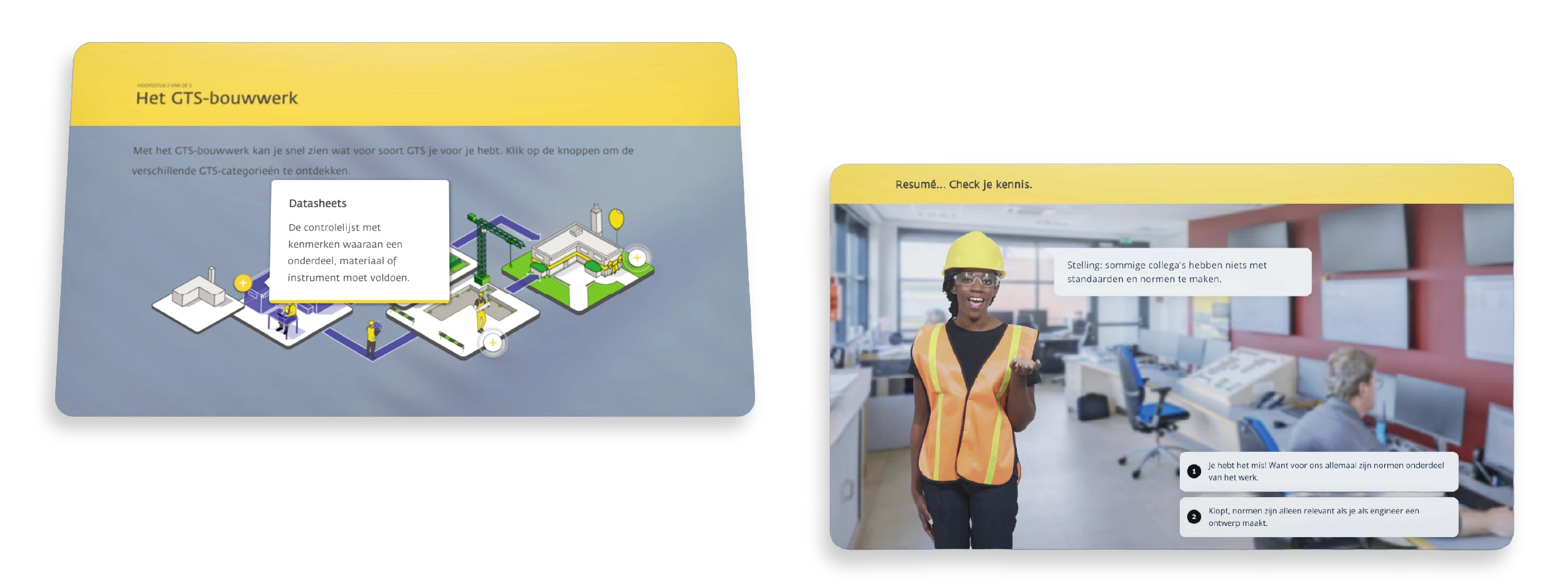
Infographics are a good example of this. These are visual representations of information, data, or processes. They make complex information clear and engaging, such as a step-by-step guide or a comparison in visual form.
Animations must not be missing either. Through an animation, you can easily explain a process, action, or concept. You might think of a short video explaining how to operate a machine or how to perform mouth-to-mouth resuscitation.
E-learnings are also filled with icons. These small visual elements can quickly convey meaning, such as a light bulb for a tip, an exclamation mark for a warning, or a checklist icon for tasks.
Visual Masterpieces
In terms of text, quite a bit has changed. While the content may have remained the same, the long blocks of text are no longer found in modern e-learning due to visual advancements. In the past, texts were accompanied by images; now various visual masterpieces are presented.
Infographics are a good example of this. These are visual representations of information, data, or processes. They make complex information clear and attractive, such as a step-by-step plan or a comparison in visual form.
Animations must not be missing either. Through an animation, you can easily explain a process, action, or concept. You might think of a short video that explains how to operate a machine or how to perform mouth-to-mouth resuscitation.
E-learnings are also filled with icons. These small visual elements can quickly convey a meaning, such as a light bulb for a tip, an exclamation mark for a warning, or a checklist icon for assignments.


The modern e-learning is far from PowerPoint
In this blog, you have read that modern e-learning is nothing like what you saw ten years ago, and that is a good thing. Nowadays, much more is possible, which developers are making thorough use of.
For students, modern e-learning represents a great and above all attractive challenge. With all the interactive elements, the material sticks better. And that should be the goal of every e-learning!
The modern e-learning is far from PowerPoint
In this blog, you have been able to read that modern e-learning is nothing like what you saw ten years ago, and that's a good thing. Nowadays, much more is possible, which developers are taking full advantage of.
For learners, modern e-learning presents a significant and above all appealing challenge. With all the interactive elements, the material sticks better. And that should be the goal of every e-learning!
About the author
Martijn is the man with the quick and sharp pen. With a background in and love for journalism, he is used to switching quickly and mastering a subject in no time. Within Indall, he works as a copywriter and has translated many complex messages into interesting stories, infused with mixed media, for various clients.
Martijn Katsman
copywriter

About the author
Martijn is the man with the fast and sharp pen. With a background in and love for journalism, he is accustomed to switching quickly and mastering a subject in no time. Within Indall, he works as a copywriter and has translated complex messages into interesting stories, interspersed with mixed media, for many clients.
Martijn Katsman
copywriter
About the author
Martijn is the man with the fast and sharp pen. With a background in and love for journalism, he is used to switching quickly and mastering a subject in no time. Within Indall, he works as a copywriter and has translated complex messages into interesting stories, interspersed with mixed media, for many clients.
Martijn Katsman
copywriter